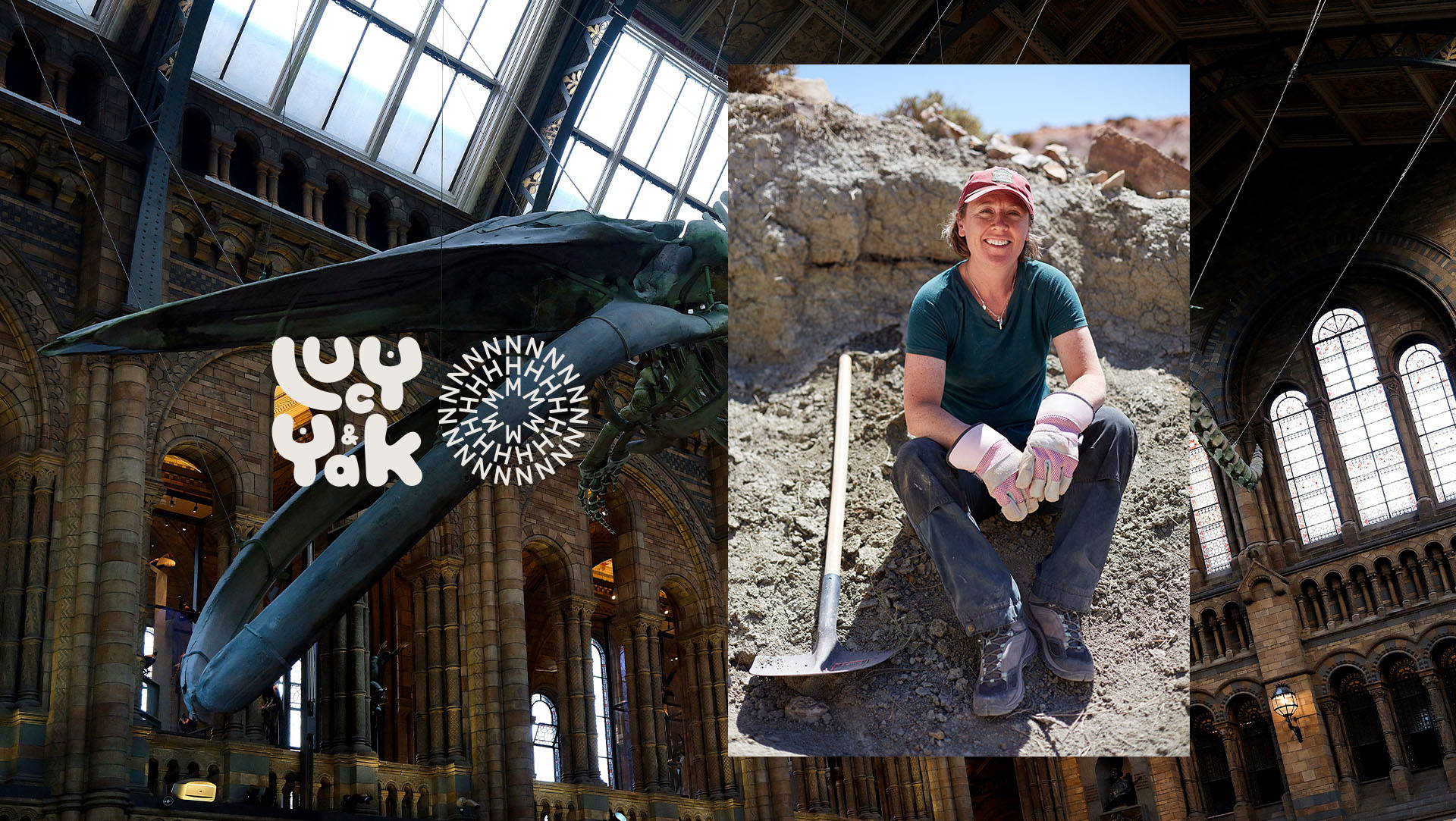

Professor Susannah Maidment is a world-leading expert on armoured dinosaurs such as Stegosaurus and Ankylosaurus. She works in the Natural History Museum's Department of Earth Sciences, which is home to one of the world's most important dinosaur collections. With a PhD in vertebrate palaeontology from the University of Cambridge and an MSci in geological sciences from Imperial College, Susannah works extensively on one of the most dinosaur-rich areas of North America, the Morrison Formation in western USA.
Can you tell us about how you got into the field of palaeontology and what drew you to it initially?
When I was a kid, we often used to go on holiday to Charmouth on the Dorset coast, which is famous for its ammonite fossils, and is where Mary Anning collected some of the earliest-known marine reptile fossils. Today it is part of the Jurassic Coast World Heritage Site. My family and I used to collect ammonites on the beach, so I was engaged with fossils from a young age. When I was around seven, my grandfather asked me what I wanted to be when I grew up. I had decided I wanted to be a scientist, and he asked me what sort of scientist. I didn’t know there were different types of scientist, so he suggested I be a dinosaur scientist. Like all seven year olds, I was a big fan of dinosaurs and had a Stegosaurus money box and lots of dino-based toys. I thought that sounded like a good idea. So I did.
Can you explain what palaeontology is? That it’s wider than the study of dinosaurs, but also of the wider natural world.
Palaeontology is the study of fossils. Fossils are the remains of past life: anything from bacteria and algae to plants, insects, shellfish, mammals and dinosaurs. We also have fossilized footprints and even poo! A major aim of palaeontology is to reconstruct past environments and ecosystems, and to understand how the diversity of life has changed over time.
What is a typical day for you working as a palaeontologist?
No day is the same for me! Most days, I work in my office or in the dinosaur collections at the Natural History Museum. Sometimes I do research: I might be studying a specimen in the collections, or analysing some data on the computer, or writing up my findings for other scientists. But there are a lot of other things I do as well as research. I currently supervise four PhD students, and I also teach Masters students. A big part of being a scientist is reviewing other people’s work, and I’m the editor of a scientific journal, so I read a lot of papers written by other palaeontologists who want to publish their work. I also do lots of public engagement: talking to the media, helping my colleagues to write news articles, or doing interviews.
What is your favourite part of the job? What do you find most thrilling?
I love so much about my job. I get to travel all over the world to study fossils and go to new places and meet new people. I love doing fieldwork and being in outdoors in remote locations finding fossils that no human has ever set eyes on before. Mostly, though, I love working with my friends and colleagues to discover new things about past life.
Why is palaeontology important and how does it impact our lives today and our futures?
Today our climate is changing very rapidly. To understand how animals and plants might respond to climatic changes, we need to look back at the past when similar environmental change occurred, and see how life responded then. In fact, the fossil record is the only way we can make predictions about what might happen in the future. This is why palaeontology has never been more important than it is today.
What advice would you give to anyone looking to get into palaeontology? Whether that be a career or as something to look into further and have as a hobby? Where’s the best place to learn about dinosaurs and palaeontology?
To do palaeontology as a career, you need to study science subjects at school, and then do a degree like geology, earth sciences or biology at university. After that, you need to do a PhD in palaeontology. Even then, it can be very difficult to get a job, because there are not many jobs for palaeontologists out there. Palaeontology is easier as a hobby! The Natural History Museum’s Dinosaurs webpages have a lot of information, news stories, quizzes, and games all about dinosaurs and are a great place to get started. There are a lot of places where you can find fossils in the UK. The Palaeontological Association’s website has some guidance about finding fossils in the UK. There are a lot of local geological associations that run field trips and put on lectures: you could try to find one in your local area, or you could join Rockwatch, a geology club for children.
*Photography: Lucie Goodayle, Natural History Museum