FAQ: Wool, let's untangle it...
WOOL, WITH A FEW THINGS WORTH KNOWING
Blended fabrics are harder to recycle than unblended ones. That’s one of the reasons we started ReYak. When you’re finished with any Lucy & Yak or L&Y piece, bring it back to us—in any condition. We’ll find it a new home, repair it or responsibly recycle it, keeping it out of landfill. And you’ll get a discount on your next order as a thank you. You’ll find the fibre composition on each piece’s product page and label, so you can see exactly what’s in the knit you’re considering.
WHAT DOES RWS ACTUALLY MEAN?
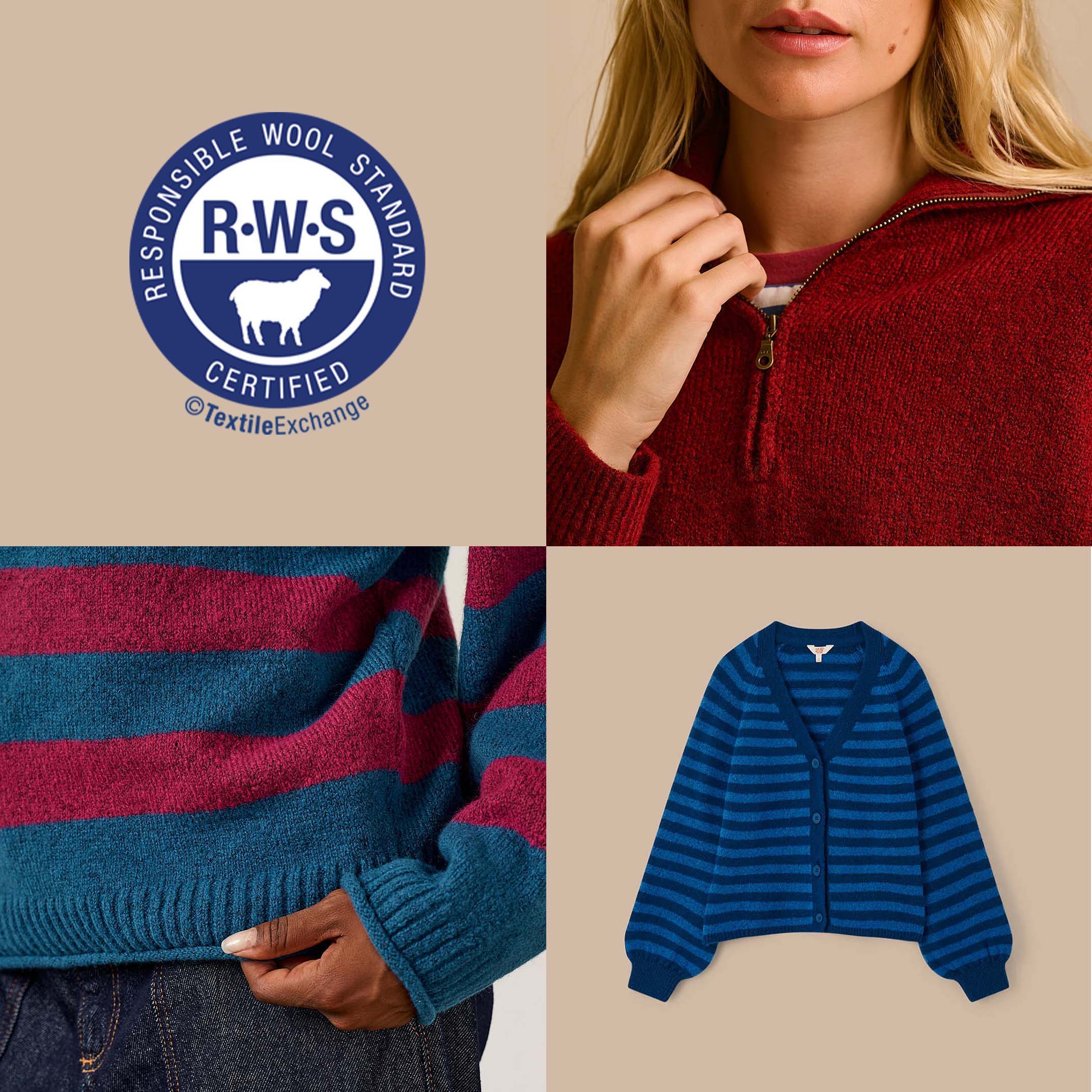
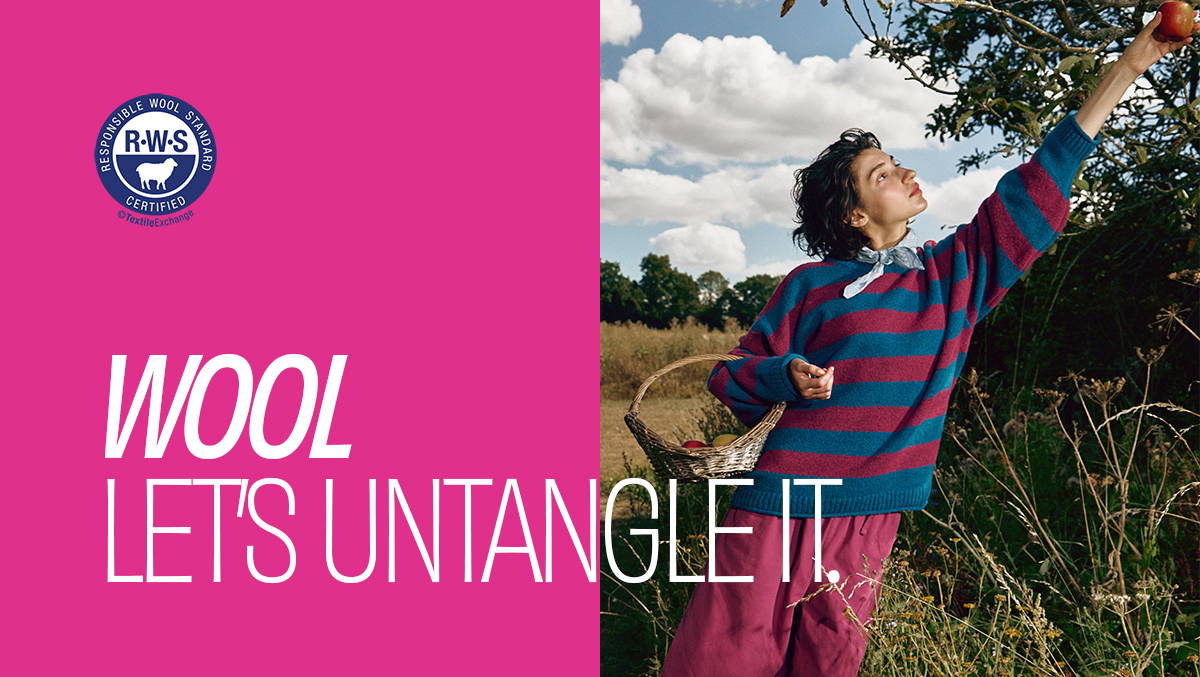
RWS stands for the Responsible Wool Standard, a voluntary standard from Textile Exchange. The wool in these pieces is RWS-certified.
Independent audits assess farms against requirements covering sheep welfare, land management and working conditions. Animal welfare requirements include access to food and water, suitable living conditions and care for sheep’s health. The standard also prohibits mulesing.
Certification also covers traceability through the supply chain, from the farm through processing and manufacturing. Each stage is audited to check that certified wool can be tracked through the process.
These are defined requirements with independent checks behind them. RWS doesn’t mean wool has no environmental impact, or settle every concern about using animal fibres. It gives you specific information about the standards behind our sourcing.
WHERE DOES THE WOOL COME FROM?
There are a few stops between fleece and finished knit, and each tells a different part of the story.
Our wool comes from RWS-certified farms. It is then spun into yarn and made into finished garments. Where a garment is made doesn’t necessarily tell you where its wool came from, so we want to share each stage clearly.
AND WHAT ABOUT THE ENVIRONMENTAL IMPACT?
There’s no single perfect fibre, and we don’t think it would be honest to say wool is always the better choice. Wool is renewable: sheep grow new fleece. But sheep farming uses land and produces greenhouse gas emissions, including methane. Processing the fibres and making the garments have impacts, too.
Recycled polyester uses existing plastic and generally requires fewer new fossil resources than virgin polyester. However, it can release microplastic fibres during wear and washing.
We consider these trade-offs alongside how a garment feels, performs and lasts. How often it’s worn, how it’s cared for and how long it stays in use matter, too. A natural fibre or recycled content tells you something about a garment, but neither tells you everything.
WHAT IF I DON'T WEAR WOOL?
Wool comes from sheep, so these pieces aren’t vegan. RWS certification doesn’t change that. We know wool won’t be the right choice for everyone. Our cotton knitwear is staying, and most of our range will continue to be made without animal fibres. We’ll clearly identify wool in product descriptions and composition labels, so you can choose what works for you.
We’re excited about what wool brings to our knitwear. And just as committed to keeping plenty of other options in the mix.
WHY WOOL, AND WHY NOW
As we develop our knitwear, we’re thinking about how a piece feels when you first pull it on—and how it holds up to being a favourite.
Wool has some useful qualities here. It’s naturally warm and breathable, with an elasticity that helps its fibres spring back into shape. It also resists odour, so wool clothing can often be worn several times between washes.
We’re introducing it selectively, where those qualities make sense for the knit. Cotton and other plant-based fibres remain a big part of our collections. Wool gives us another material to work with, and you another option to choose.
WHY BLEND IT WITH RECYCLED POLYESTER?
A knit needs to do more than look lovely on its hanger. There’s all the wearing that comes next.
For these knits, blending wool with recycled polyester gives us the strength, shape and durability we’re looking for. Our aim is to use only as much polyester as needed for that job, while retaining wool’s natural benefits.
That choice comes with trade-offs. Recycled polyester makes use of existing plastic, but it is still plastic. It doesn’t naturally biodegrade, and adding wool doesn’t make the finished blend biodegradable either.
Blended fabrics are harder to recycle than unblended ones. That’s one of the reasons we started ReYak.
When you’re finished with any Lucy & Yak or L&Y piece, bring it back to us—in any condition. We’ll find it a new home, repair it or responsibly recycle it, keeping it out of landfill. And you’ll get a discount on your next order as a thank you.
You’ll find the fibre composition on each piece’s product page and label, so you can see exactly what’s in the knit you’re considering.
WHAT DOES RWS ACTUALLY MEAN?
RWS stands for the Responsible Wool Standard, a voluntary standard from Textile Exchange. The wool in these pieces is RWS-certified.
Independent audits assess farms against requirements covering sheep welfare, land management and working conditions. Animal welfare requirements include access to food and water, suitable living conditions and care for sheep’s health. The standard also prohibits mulesing.
Certification includes checks to track certified wool through the supply chain, from the farm through processing and manufacturing.
These are defined requirements with independent checks behind them. RWS doesn’t mean wool has no environmental impact, or settle every concern about using animal fibres. It gives you specific information about the standards behind our sourcing.
WHERE DOES THE WOOL COME FROM?
There are a few stops between fleece and finished knit, and each tells a different part of the story.
- Our wool comes from RWS-certified farms in Turkey.
- It is spun into yarn in Turkey.
The finished garments are made in Turkey.
Where a garment is made doesn’t necessarily tell you where its wool came from. That’s why we want to share each stage.
AND WHAT ABOUT THE ENVIRONMENTAL IMPACT
There’s no single perfect fibre, and we don’t think it would be honest to say wool is always the better choice.
Wool is renewable: sheep grow new fleece. But sheep farming uses land and produces greenhouse gas emissions, including methane. Processing the fibres and making the garments have impacts, too.
Recycled polyester uses existing plastic and generally requires fewer new fossil resources than virgin polyester. However, it can release microplastic fibres during wear and washing.
We consider these trade-offs alongside how a garment feels, performs and lasts. How often it’s worn, how it’s cared for and how long it stays in use matter, too. A natural fibre or recycled content tells you something about a garment, but neither tells you everything.
WHAT IF I DON'T WEAR WOOL?
Wool comes from sheep, so these pieces aren’t vegan. RWS certification doesn’t change that.
We know wool won’t be the right choice for everyone. Our cotton knitwear is staying, and most of our range will continue to be made without animal fibres. We’ll clearly identify wool in product descriptions and composition labels, so you can choose what works for you.
We’re excited about what wool brings to our knitwear. And just as committed to keeping plenty of other options in the mix.
WHY WOOL, AND WHY NOW?
As we develop our knitwear, we’re thinking about how a piece feels when you first pull it on—and how it holds up to being a favourite.
Wool has some useful qualities here. It’s naturally warm and breathable, with an elasticity that helps its fibres spring back into shape. It also resists odour, so wool clothing can often be worn several times between washes.
We’re introducing it selectively, where those qualities make sense for the knit. Cotton and other plant-based fibres remain a big part of our collections. Wool gives us another material to work with, and you another option to choose.
WHY BLEND IT WITH RECYCLED POLYESTER?
A knit needs to do more than look lovely on its hanger. There’s all the wearing that comes next.
For these knits, blending wool with recycled polyester gives us the strength, shape and durability we’re looking for. Our aim is to use only as much polyester as needed for that job, while retaining wool’s natural benefits.
That choice comes with trade-offs. Recycled polyester makes use of existing plastic, but it is still plastic. It doesn’t naturally biodegrade, and adding wool doesn’t make the finished blend biodegradable either.
Blended fabrics are harder to recycle than unblended ones. That’s one of the reasons we started ReYak.
When you’re finished with any Lucy & Yak or L&Y piece, bring it back to us—in any condition. We’ll find it a new home, repair it or responsibly recycle it, keeping it out of landfill. And you’ll get a discount on your next order as a thank you.
You’ll find the fibre composition on each piece’s product page and label, so you can see exactly what’s in the knit you’re considering.
WHAT DOES RWS ACTUALLY MEAN?
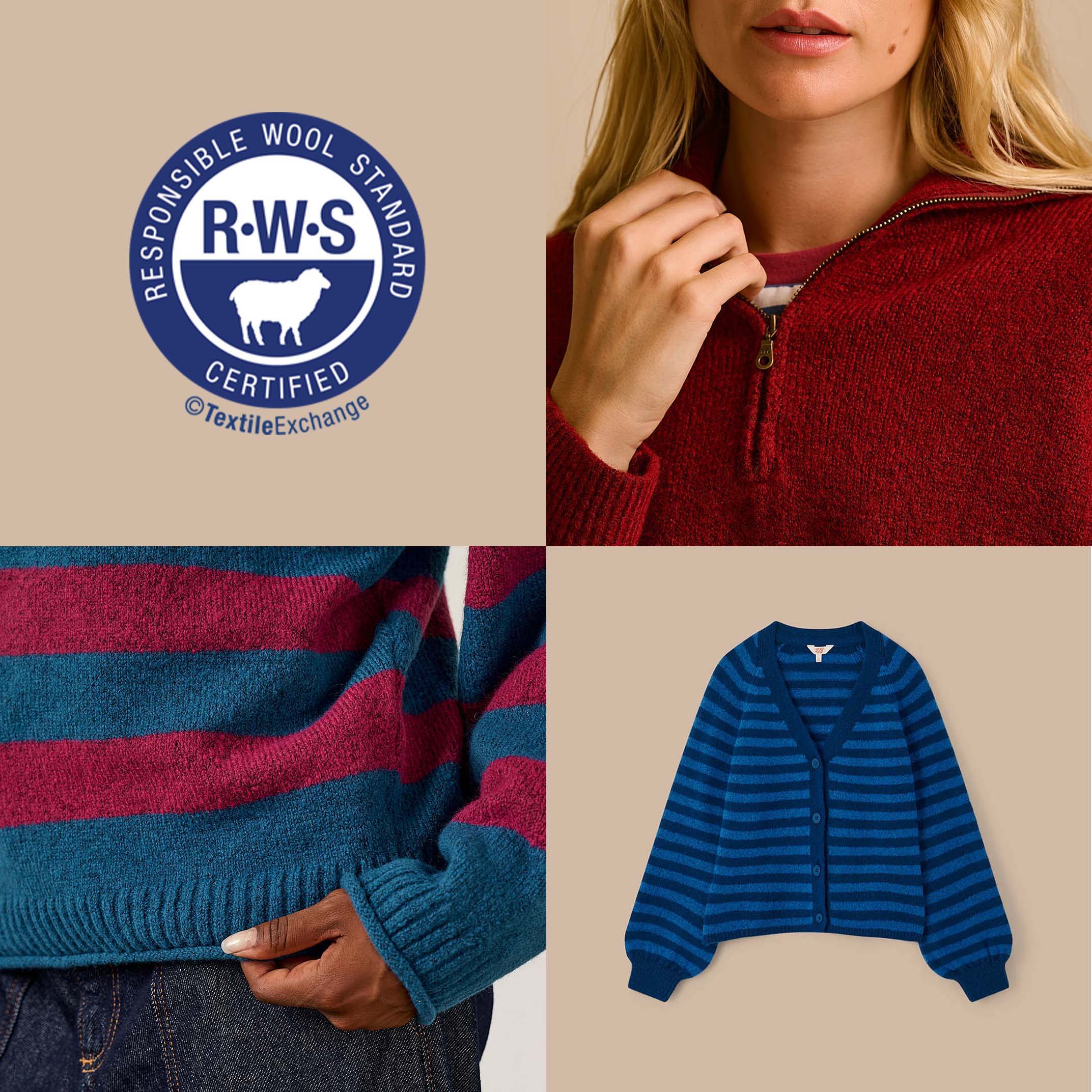
RWS stands for the Responsible Wool Standard, a voluntary standard from Textile Exchange. The wool in these pieces is RWS-certified.
Independent audits assess farms against requirements covering sheep welfare, land management and working conditions. Animal welfare requirements include access to food and water, suitable living conditions and care for sheep’s health. The standard also prohibits mulesing.
Certification includes checks to track certified wool through the supply chain, from the farm through processing and manufacturing.
These are defined requirements with independent checks behind them. RWS doesn’t mean wool has no environmental impact, or settle every concern about using animal fibres. It gives you specific information about the standards behind our sourcing.
WHERE DOES THE WOOL COME FROM?
There are a few stops between fleece and finished knit, and each tells a different part of the story.
- Our wool comes from RWS-certified farms in Turkey.
- It is spun into yarn in Turkey.
The finished garments are made in Turkey.
Where a garment is made doesn’t necessarily tell you where its wool came from. That’s why we want to share each stage.
- Our wool comes from RWS-certified farms in Turkey.
- It is spun into yarn in Turkey.
The finished garments are made in Turkey.
Where a garment is made doesn’t necessarily tell you where its wool came from. That’s why we want to share each stage.
AND WHAT ABOUT THE ENVIRONMENTAL IMPACT?
There’s no single perfect fibre, and we don’t think it would be honest to say wool is always the better choice.
Wool is renewable: sheep grow new fleece. But sheep farming uses land and produces greenhouse gas emissions, including methane. Processing the fibres and making the garments have impacts, too.
Recycled polyester uses existing plastic and generally requires fewer new fossil resources than virgin polyester. However, it can release microplastic fibres during wear and washing.
We consider these trade-offs alongside how a garment feels, performs and lasts. How often it’s worn, how it’s cared for and how long it stays in use matter, too. A natural fibre or recycled content tells you something about a garment, but neither tells you everything.
WHAT IF I DON'T WEAR WOOL?
Wool comes from sheep, so these pieces aren’t vegan. RWS certification doesn’t change that.
We know wool won’t be the right choice for everyone. Our cotton knitwear is staying, and most of our range will continue to be made without animal fibres. We’ll clearly identify wool in product descriptions and composition labels, so you can choose what works for you.
We’re excited about what wool brings to our knitwear. And just as committed to keeping plenty of other options in the mix.